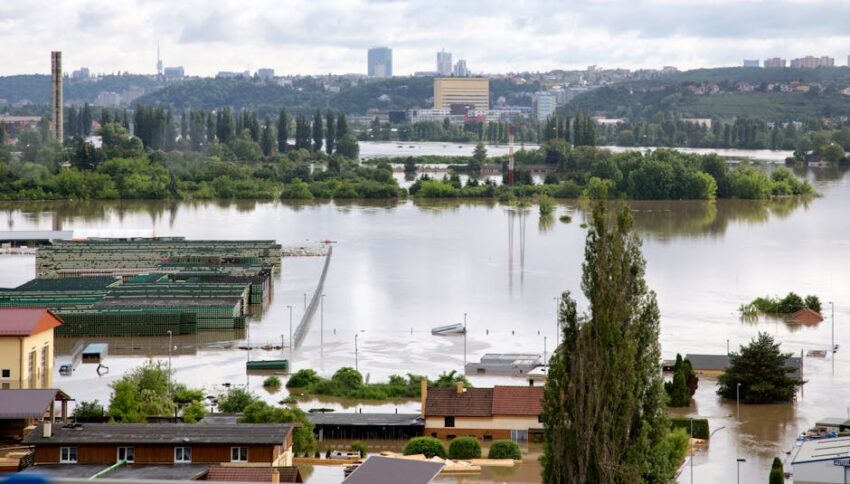
Why do extreme weather events matter for food safety?
When a heatwave swarms a city or a flood inundates a rural valley, the immediate concern is often property damage, power outages, or human injury. A less obvious, but equally serious, consequence is the heightened risk of food‑borne illness. Food safety depends on controlling three factors: the type of pathogen, the environment that supports its growth, and the way food is handled. Heat and water dramatically shift each of those factors.
Readers who are looking for practical guidance usually ask:
- How does hot weather make bacteria multiply faster?
- What does flood water do to fresh produce and packaged foods?
- Which foods become most dangerous during and after these events?
- What steps can households, restaurants, and food producers take to limit illness?
The sections below answer those questions with a focus on the science behind the risk, real‑world examples, and actionable preventative measures.
What happens to pathogens during a heatwave?
Most food‑borne bacteria, such as Salmonella, Escherichia coli (E. coli), and Campylobacter, have optimal growth temperatures between 35 °C and 43 °C (95 °F‑109 °F). A heatwave that pushes ambient temperature above 30 °C (86 °F) shortens the time it takes for a bacterial population to double.
Temperature‑time relationship
The “danger zone” for food safety is defined by the US FDA as 4 °C–60 °C (40 °F‑140 °F). Within this range, each 10 °C increase roughly halves the time required for bacteria to reach harmful levels. For example, at 20 °C a pathogen may need 12 hours to reach a dose that can cause illness; at 30 °C the same dose can appear in only 6 hours.
Heat‑induced changes in food composition
Warm conditions also affect food itself:
- Moisture evaporates slower, leaving surfaces slightly wetter—a condition that favors bacterial adhesion.
- Proteins denature less quickly than they would under cooking, preserving a nutrient‑rich environment for microbes.
- Fat oxidation can produce free radicals that, paradoxically, support the growth of some yeasts and molds.
Case study: The 2019 European heatwave
During the summer of 2019, several EU countries recorded temperatures above 38 °C (100 °F) for more than two weeks. In France, an outbreak of Staphylococcus aureus toxin poisoning was traced to a catering service that left rice dishes at room temperature for 8 hours during a street festival. Laboratory analysis showed bacterial counts 100‑fold higher than typical summer levels, confirming the direct link between prolonged heat exposure and toxin formation.
How floods contaminate food supplies
Flood water rarely carries only sediment; it also transports pathogens from soil, sewage, animal waste, and industrial runoff. When floodwaters breach farms, processing plants, or distribution hubs, they create multiple routes for contamination.
Sources of flood‑borne pathogens
- Sewage overflow: Combined sewer systems can dump untreated waste into waterways during heavy rain. This introduces viruses (e.g., norovirus, hepatitis A) and bacteria (e.g., Vibrio cholerae) into the environment.
- Livestock runoff: Manure rich in E. coli O157:H7 and Salmonella can be washed onto fields where crops are growing.
- Soil displacement: Floods stir up dormant spores of Clostridium perfringens and Bacillus cereus, which can survive for months in the soil.
- Industrial discharge: Chemical spills may not cause infection but can compromise food integrity, making it more susceptible to microbial colonisation.
Impact on different food categories
| Food type | Primary risk after flooding | Typical contamination routes |
|---|---|---|
| Fresh produce (leafy greens, berries) | Direct contact with contaminated water | Field irrigation, post‑harvest washing |
| Root vegetables (potatoes, carrots) | Surface and internal contamination | Soil splash, water pooling in storage pits |
| Dry goods (rice, flour, nuts) | Moisture‑induced mold growth | Water intrusion into warehouses, damaged sacks |
| Meat and poultry | Cross‑contamination during processing | Flooded slaughterhouses, compromised cold chain |
| Dairy products | Pathogen proliferation in warm, wet environments | Leaking refrigeration units, post‑processing handling |
Real‑world example: 2021 Midwest floods
In the United States, the spring floods that hit the Mississippi River basin overwhelmed levees in Iowa and Illinois. Investigations later found that spinach harvested from fields flooded for more than 48 hours carried concentrations of Enterohemorrhagic E. coli (EHEC) exceeding safety limits. The outbreak was linked to a batch of packaged salads that caused 126 reported illnesses across four states.
Which pathogens become most problematic?
Not all microbes respond the same way to heat or water. The most concerning agents during extreme weather are those that:
- Grow rapidly at temperatures common in kitchens or storage rooms.
- Produce toxins that remain active even after the bacteria die.
- Resist brief periods of drying, allowing survival in flood‑damaged grain stores.
Bacteria
- Staphylococcus aureus: Produces heat‑stable toxins. Heatwaves encourage bacterial multiplication on cooked meats, salads, and dairy.
- Clostridium perfringens: Forms spores that survive cooking. Floods can deposit spores in dry grain; warming those grains during storage triggers germination.
- Vibrio vulnificus: Thrives in warm brackish water. Coastal flooding can introduce this bacterium into shellfish, especially oysters.
Viruses
- Norovirus: Highly contagious, spreads via contaminated water. Flood‑related sewage overflows are classic triggers.
- Hepatitis A: Persists in the environment for weeks; floodwater ingestion or cross‑contamination of produce is a common route.
Parasites and fungi
- Giardia lamblia: Waterborne protozoan; floods can contaminate drinking water supplies used for food preparation.
- Aspergillus flavus: Mold that produces aflatoxin. Moist, warm storage conditions after a flood create the perfect environment for this fungus on nuts and grains.
How do supply chains amplify the risk?
Modern food systems move products across continents within hours. This speed reduces the window for natural bacterial die‑off, but it also means that a single contamination event can affect thousands of consumers.
Cold‑chain disruption
Both heatwaves and floods can knock out power at distribution centers. When refrigeration fails, perishable items quickly climb into the danger zone. Even a 4‑hour power loss can raise the internal temperature of a refrigerated truck from 4 °C to 15 °C, a level at which many pathogens double every 2 hours.
Cross‑contamination during transport
Vehicles that traverse flood‑covered roads often pick up water in tire treads and undercarriages. That water can splash onto boxes of fresh produce, especially if loading docks are not sealed.
Regulatory challenges
During emergencies, inspection agencies may prioritize infrastructure restoration over routine sampling. This creates gaps in the detection of contaminated lots.
Practical steps for households
Most readers are most concerned about the food they cook at home. Below are concrete actions that reduce exposure during and after extreme weather.
Temperature control
- Keep refrigerator temperature at or below 4 °C (40 °F) and freezer at –18 °C (0 °F). Use a plug‑in thermometer to verify.
- If power is lost, keep doors closed. A full freezer can maintain safe temperature for ~48 hours; a half‑full freezer for ~24 hours.
- When the outdoor temperature exceeds 30 °C, limit the time perishable foods spend on the counter to 1 hour.
- Re‑heat leftovers to an internal temperature of at least 74 °C (165 °F) before serving.
Handling flood‑exposed foods
- If a food item has been in direct contact with floodwater, discard it. This includes fresh produce, bulk grains, and any packaged goods with swollen, torn, or water‑logged packaging.
- Wash fruits and vegetables with running water; for leafy greens, soak in a solution of one part vinegar to three parts water for 5 minutes, then rinse.
- Dry washed produce thoroughly with clean cloths or salad spinners to remove residual moisture that can promote bacterial growth.
- Inspect canned goods for bulging lids, rust, or leakage—signs of contamination—before opening.
Sanitation practices
- Disinfect kitchen surfaces with a solution of 1 tablespoon bleach per litre of water after handling any potentially contaminated food.
- Separate raw meats from ready‑to‑eat foods using distinct cutting boards and knives.
- Wash hands with soap for at least 20 seconds before and after food preparation, especially after returning from flood‑affected areas.
Guidelines for restaurants and food‑service operators
Commercial kitchens face amplified risk because they serve many customers and handle larger volumes of food.
Incoming goods inspection
- Require suppliers to provide a Certificate of Analysis (CoA) for high‑risk items during the flood season.
- Visually inspect bulk deliveries for water damage, mold, or off‑odors before acceptance.
- Implement a “hold‑and‑test” policy for produce sourced from flood‑affected regions; test for E. coli, Salmonella, and coliforms.
Temperature monitoring
- Install continuous data‑loggers on refrigeration units and set alerts for temperature excursions beyond 4 °C.
- Perform a “first‑in, first‑out” rotation at least twice daily during heatwaves to minimise storage time.
- Allocate backup generators with sufficient fuel to run critical refrigeration for at least 72 hours.
Cleaning and sanitation after flooding
- When any part of the kitchen floor or equipment has been splashed with floodwater, dismantle, clean, and sanitize according to a validated SOP before resuming service.
- Replace insulation and sealants that have become water‑logged, as they can harbour mold.
- Conduct a post‑incident microbial swab of surfaces to verify that counts are below accepted limits.
Mitigation strategies for food producers and processors
Large‑scale operators have the resources to invest in infrastructure that reduces vulnerability.
Designing flood‑resilient facilities
- Elevate critical equipment (coolers, control panels) above historical flood levels plus a safety margin of 0.5 m.
- Install flood barriers or water‑tight doors at loading bays.
- Use moisture‑resistant flooring materials (e.g., sealed concrete) that can be quickly dried.
- Integrate drainage systems that direct water away from storage silos.
Heat‑wave preparedness
- Deploy evaporative cooling or supplemental air‑conditioning in high‑risk zones such as raw‑material receiving areas.
- Schedule high‑risk processing steps (e.g., meat grinding, salad preparation) during cooler night hours when ambient temperature is lower.
- Implement predictive temperature mapping using IoT sensors to anticipate hotspots in product batches.
Testing and verification
- Adopt rapid PCR‑based kits for on‑site detection of Salmonella, Listeria, and E. coli during periods of extreme weather.
- Run regular environmental monitoring (air, surfaces, water) to catch early signs of contamination.
- Maintain a documented corrective‑action plan that triggers product hold, recall, or re‑processing when limits are exceeded.
Policy and community actions that reduce risk
While individual actions matter, broader coordination helps keep food safe at the population level.
Early‑warning systems
Public health agencies can issue advisories when heat indices exceed 35 °C (95 °F) for more than three consecutive days, recommending stricter temperature controls in food establishments.
Infrastructure investment
Municipalities that upgrade storm‑water management reduce the likelihood that floodwater reaches agricultural fields. Similarly, reinforcing the electrical grid lessens refrigeration outages during heat spikes.
Education campaigns
Targeted outreach—through local health departments, Extension services, and industry groups—teaches farmers how to assess field moisture, and teaches consumers how to handle flood‑exposed foods safely.
What to watch for after an extreme‑weather event
Even when immediate dangers have passed, lingering hazards may persist.
- Hidden moisture: Grain silos and stored dry foods can retain moisture for weeks, providing a breeding ground for molds. Use moisture meters to verify that levels stay below 14 % for wheat and below 12 % for corn.
- Temperature spikes: Check that refrigeration units have returned to safe temperatures before restocking.
- Cross‑contamination: Re‑examine workflow patterns; water‑splashed floors can cause drips onto previously safe products.
- Consumer complaints: Monitor call‑center logs for spikes in gastrointestinal symptoms; early detection can prompt rapid product recalls.
Key take‑aways for staying safe
Extreme heat and flooding reshape the environment in which food‑borne pathogens live. Understanding the mechanisms—accelerated bacterial growth, water‑borne contamination, and compromised cold chains—helps translate risk into concrete actions. Households should enforce strict temperature control, discard any food that contacted floodwater, and maintain rigorous hygiene. Restaurants and processors need robust inspection, continuous monitoring, and well‑drilled response plans. Finally, community‑level investments in infrastructure and education create the background that makes safe food possible even when the weather turns extreme.