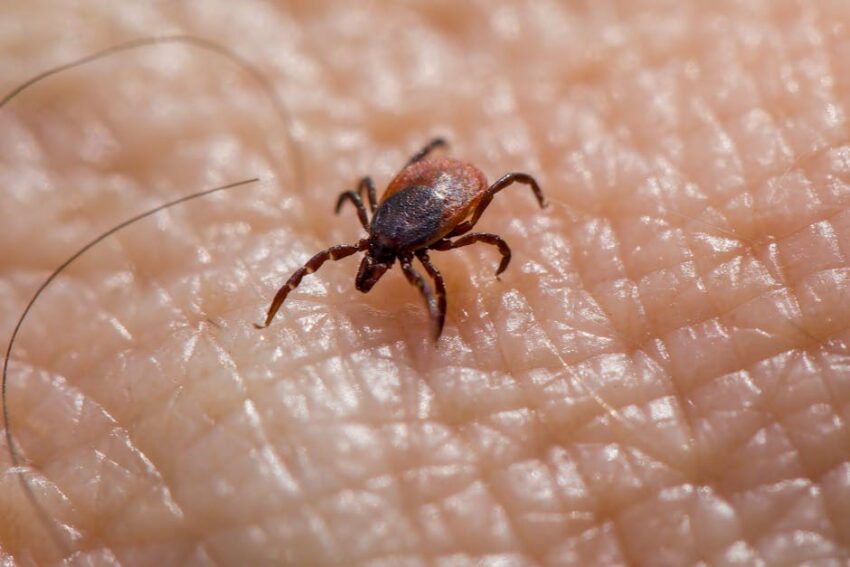
Why are ticks appearing farther north in Europe?
Over the past two decades, public health agencies have reported an increase in tick encounters in regions that were once considered too cold for the insects to thrive. The main driver of this shift is climate change. Warmer winters, milder springs and longer summers create an environment where tick life cycles can complete more quickly and where host animals—deer, rodents and birds—remain active for longer periods.
Two species dominate the discussion in Europe: Ixodes ricinus, the castor‑bean tick, and Ixodes persulcatus, the taiga tick. Both are capable of transmitting several pathogens, including the bacteria that cause Lyme disease and the viruses responsible for tick‑borne encephalitis. As temperatures rise, the geographical limits that once kept these species confined to central and southern latitudes are eroding.
What climate factors influence tick survival and activity?
Ticks are ectothermic arthropods; they rely on external heat to regulate their metabolism. Three climatic variables have the strongest effect on their population dynamics:
- Temperature: Development from egg to adult accelerates when average daily temperatures stay above 7–10 °C. A sustained spring temperature of 12 °C can shorten the whole questing season by several weeks.
- Humidity: Ticks lose water through their cuticle, so they need a relative humidity of at least 80 % at the leaf‑level to stay on vegetation and wait for a host. Increased summer rainfall or persistent morning dew helps maintain these conditions.
- Snow cover: A thick, stable snow layer insulates ticks during the coldest months, reducing mortality. Milder winters with intermittent thawing expose ticks to freeze–thaw cycles that increase death rates.
When climate models show a northward shift of the 7 °C isotherm and a rise in summer humidity, they also predict the expansion of suitable tick habitat.
Which European regions are most at risk?
Risk maps generated by the European Centre for Disease Prevention and Control (ECDC) combine climate projections with data on host density and land use. The current pattern shows:
| Region | Current tick activity (2020‑2022) | Projected change by 2040 |
|---|---|---|
| Scandinavia (southern Sweden, Denmark, coastal Norway) | Occasional I. ricinus sightings | Established seasonal activity, especially in forested inland areas |
| Baltic states (Latvia, Estonia, Lithuania) | Regular activity in lowlands | Higher densities and longer questing periods |
| Poland and the Czech Republic | High incidence of Lyme disease | Further northward spread into previously low‑risk provinces |
| United Kingdom (England and Wales) | Well‑documented tick population | Expansion into upland and coastal zones previously unsuitable |
These projections are not uniform. Local micro‑climates, forest fragmentation and land‑use policies can accelerate or blunt the overall trend.
How do changing tick habitats affect disease transmission?
When ticks move into new areas, they encounter new host communities. This can alter the pathogen composition within the tick population in two ways:
- Amplification: If the new region hosts abundant reservoir animals (e.g., roe deer for Lyme spirochetes), the prevalence of infected ticks can rise sharply.
- Dilution: Introducing hosts that are poor reservoirs (some bird species) may reduce the proportion of infected ticks, even while total tick numbers increase.
Real‑world data from the Baltic coast illustrate both effects. In Estonia, the northward spread of I. persulcatus brought higher rates of tick‑borne encephalitis, while in parts of northern Germany the same expansion coincided with a modest drop in Lyme disease incidence because the ticks fed more often on small mammals that are less competent reservoirs.
What role do human activities play?
Human land use interacts with climate in several ways:
- Forestry and reforestation: Intensive planting of mixed hardwoods creates continuous understory that shelters ticks and their hosts.
- Agricultural abandonment: Fields left fallow revert to scrub and young forest, providing new edge habitats that many tick species prefer.
- Urban green spaces: Parks and peri‑urban woodlands often mimic natural habitats, especially when they are not regularly mowed or treated with acaricides.
- Travel and outdoor recreation: More people venture into newly tick‑infested forests, raising the probability of human‑tick contact and moving pathogens across borders.
The combined effect is a subtle but measurable rise in reported tick bites in suburban districts of Stockholm, Helsinki and Copenhagen over the last five years.
How are health authorities responding?
European nations have adopted a mix of surveillance, public education and targeted control measures:
- Surveillance networks: Countries report tick activity and pathogen testing results to the ECDC’s Tick‑Borne Disease Surveillance System. Data are analysed at the NUTS‑2 (regional) level to spot emerging hotspots.
- Public information campaigns: Leaflets, website alerts and school programs teach people how to perform tick checks, remove attached ticks safely, and recognize early symptoms of Lyme disease and encephalitis.
- Habitat management: Some municipalities conduct controlled burns or clear underbrush along popular walking trails to reduce tick density.
- Vaccination: In Austria and parts of Switzerland, a vaccine against tick‑borne encephalitis (TBE) is offered to residents in high‑risk zones. No Lyme vaccine is currently approved in Europe.
These actions are most effective when they are coordinated across borders, because wildlife and ticks do not respect national frontiers.
What practical steps can individuals take?
Even with national programmes in place, personal protection remains the first line of defence. The following checklist works in any European woodland:
- Wear long sleeves and trousers, preferably in light colours that make ticks easier to see.
- Apply a repellent containing 20 % DEET, 30 % picaridin, or 0.5 % permethrin (treated clothing only).
- Stay on cleared paths; avoid brushing against low vegetation.
- Perform a tick check within two hours of leaving the area. Focus on the scalp, behind ears, underarms, groin and behind the knees.
- If a tick is found, use fine‑pointed tweezers to grasp it as close to the skin as possible and pull steady upward. Clean the bite site with alcohol.
- Record the date, location and species (if identifiable). If the tick was attached for more than 24 hours, seek medical advice, especially if symptoms such as rash, fever or headache develop.
What are the uncertainties and research gaps?
Predicting tick spread is complicated by several unknowns:
- Micro‑climatic variation: Small-scale temperature and humidity differences can create pockets of suitable habitat that broad climate models miss.
- Host movement: Deer populations are managed differently across Europe, and sudden changes in hunting quotas can alter tick‑host encounters.
- Pathogen evolution: Some bacteria show genetic adaptation that could affect transmissibility, but data are limited.
- Socio‑economic factors: Public awareness, health‑care access and reporting practices vary, influencing the apparent incidence of tick‑borne disease.
Ongoing projects, such as the EU‑funded Horizon Europe “TICK‑CROSS” programme, aim to integrate high‑resolution climate modelling with wildlife tracking data to produce more granular risk maps.
What does the future likely hold for Europe’s tick landscape?
If current temperature trends continue, the 7 °C isotherm will move roughly 150 km northward by 2050. This shift will make much of southern Scandinavia and the Baltic coast seasonally suitable for both I. ricinus and I. persulcatus. Longer questing seasons will increase the window for pathogen transmission, potentially raising the annual number of tick‑borne disease cases by 10–30 % in these newly affected regions.
At the same time, better surveillance, public education and targeted habitat management can mitigate the impact. The balance between climate‑driven expansion and human‑led prevention will determine how severe the health burden becomes.